Understanding the Current Landscape
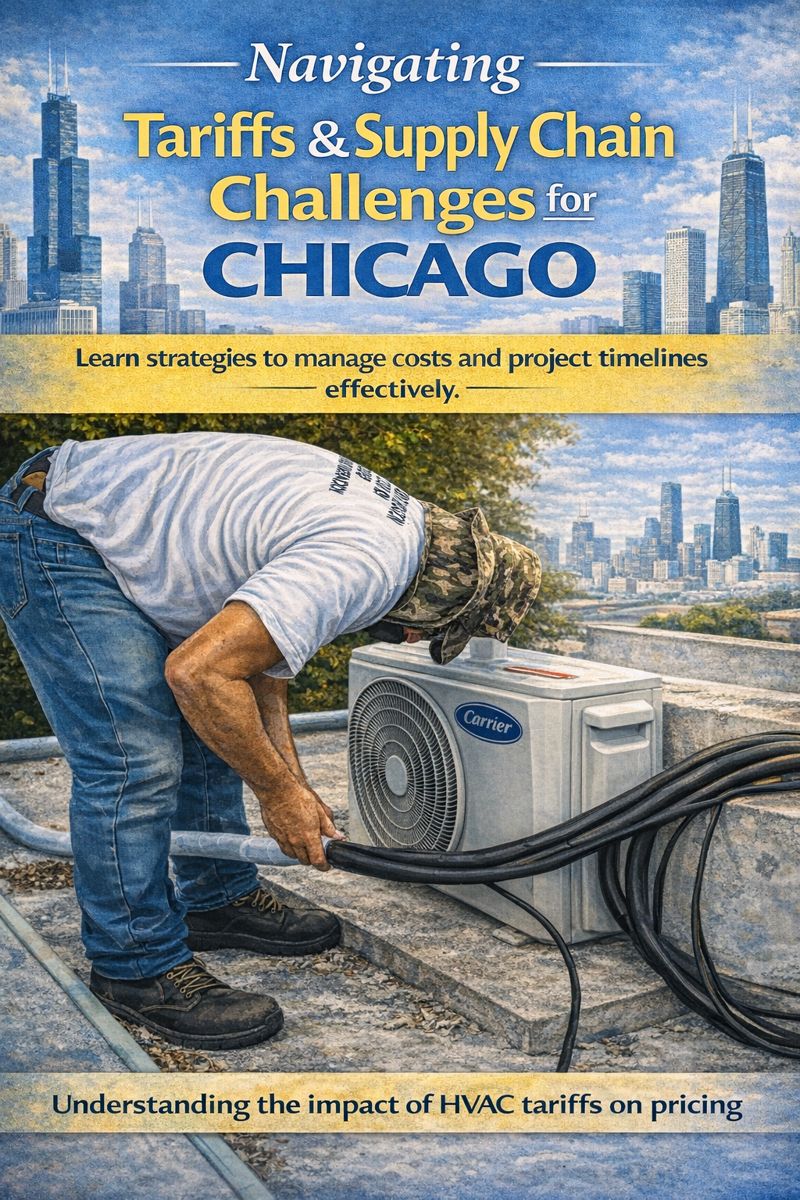
The HVAC industry in Chicago is undergoing significant changes due to tariffs and supply chain disruptions. These challenges have led to increased costs and project delays, forcing contractors and project owners to adapt quickly.
Impact of Tariffs on HVAC Costs
Since 2020, commercial HVAC equipment prices have surged by 40%. The introduction of tariffs in 2025 has added another 14-50% depending on the country of origin. This has prompted HVAC contractors to implement shorter quote validity periods, typically ranging from 7 to 15 days. Project owners are now adjusting their budgets to include 15-20% contingencies as the new norm.
Understanding Effective Tariff Rates
Effective tariff rates have escalated from 4% in 2024 to 26% in 2025 for the top five HVAC-importing countries. This includes:
- Section 232 steel/aluminum tariffs at 50%
- Section 301 China tariffs ranging from 30-40%
- A baseline 10% import duty
Best Practices for HVAC Contractors
To navigate these tumultuous times, HVAC companies are adopting several strategies:
Diversifying Suppliers
Relying on a single supplier can expose businesses to tariff risks. Diversifying suppliers across various regions helps mitigate this exposure. Learn more about supplier diversification.
Optimizing Inventory Management
Adjusting safety stocks of critical parts and materials can help hedge against production delays and pricing spikes. Explore inventory management strategies.
Enhancing Communication
Maintaining transparent communication with customers regarding delays and pricing fluctuations fosters trust and sets realistic expectations. Find out more about effective communication.
Recent Statistics and Trends
Construction input prices jumped 1.4% in January 2025, marking the largest monthly increase in two years. This spike is attributed to a rush to purchase materials ahead of potential tariffs. In Chicago, construction costs increased by 2.6% in the first quarter of 2025, with annual increases reaching 4.5%. Material costs now average approximately $50 per square foot.
Case Studies on Tariff Impacts
The Lincoln Yards development in Chicago experienced a 7-10% spike in estimated material costs since Q1 2025 due to tariff-related hikes, leading to project delays and financial restructuring. Read more about Lincoln Yards.
FAQs: Addressing Common Concerns
How can HVAC companies mitigate the impact of tariffs?
By diversifying their supplier base, optimizing inventory management, and enhancing communication with customers.
What are the long-term effects of these disruptions on HVAC projects?
Potential long-term effects include sustained higher costs, project delays, and the need for strategic shifts in sourcing and operations.
Conclusion and Call to Action
HVAC contractors in Chicago must stay informed about these changes to thrive in the current environment. By adopting proactive strategies, they can better navigate the complexities introduced by tariffs and supply chain issues. For those in need of reliable HVAC services, Eddie Green HVAC offers professional solutions tailored to your needs. Contact us today at (224) 857-3327 or visit our website at chicagohvacpro.com for more information.